Airbnb's 2026 Summer Release: What Hosts Need to Know and Do

Key takeaways
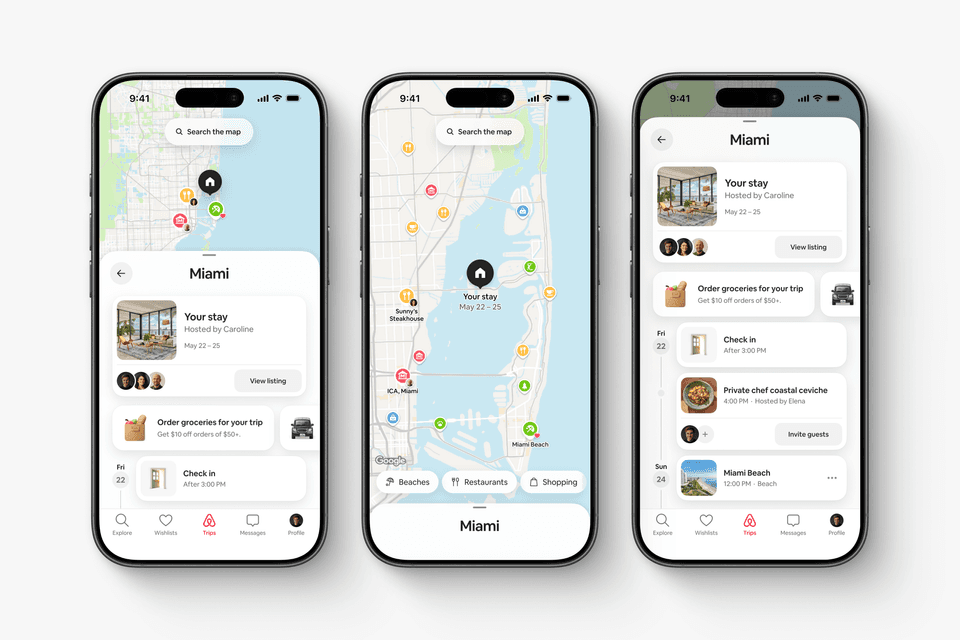
Airbnb is transforming from just an accommodation platform into a trip operating system. Groceries, pickups, hotels, experiences, and AI planning mean Airbnb now touches every moment of a trip.
Airbnb’s AI is replacing the host in the discovery and sales process. Structured listing data now determines whether you get booked and Hostaway keeps that data complete and synced across every platform automatically.
Airbnb quietly launched the travel industry's most aggressive loyalty program. The 15% hotel-to-home credit funnels hotel bookers back into home inventory.
Your review history is now a permanent algorithmic signal. AI scans your entire review history for recurring patterns. Hostaway's Review Insights AI identifies those patterns so you can stay ahead of the problem.
Direct bookings are no longer optional. As Airbnb's AI owns more of the on-platform guest relationship, Hostaway's messaging automation and direct booking tools help you build the off-platform relationship no algorithm can take away.
Using AI to ‘make it a better trip’ is how Airbnb's Chief Business Officer Dave Stephenson described the company's strategy at this year's summer release event in an interview with AirDNA. Not a better stay but a better trip, from the moment a guest starts dreaming about a destination to the moment they get home.
That distinction matters more than it sounds. Leisure travel is non-linear. A business traveler books a flight, then a hotel, then a car which is linear, predictable, and transactional. But a leisure traveler might start with a FIFA World Cup match, or a food tour in Rome, or a specific neighborhood they want to experience, and only then think about where to sleep. Airbnb's 2026 Summer Release is built for that second traveler. It's an attempt to become the entry point for every possible version of a non-linear trip.
For Airbnb hosts, understanding the strategic logic behind what was announced matters as much as the individual features. Because while the flywheel Airbnb is building creates genuine opportunities for those who understand it, it also shifts significant control away from hosts and toward the platform.
Here's what the Airbnb Summer Release 2026 actually changed, what it means, and what to do about it.
From "Everything App" to full-trip utility: How 2026 differs from 2025
Before getting into what's new, it's worth understanding how this release fits into Airbnb's multi-year arc because it changes how you should read each announcement. Here’s how the 2026 updates differ from Airbnb’s 2025 Summer Release.
| 2025 | 2026 |
Strategy | Introduce the "everything app" concept | Fill in the actual trip, end to end |
Services | Internal marketplace of providers | Named external brand partnerships (Instacart, Welcome Pickups, Bounce) |
AI role | Hinted at cross-recommendation | Direct layer in discovery, comparison, Q&A, planning, and support |
Hotels | Not yet | Live in 20 cities with loyalty mechanics |
Host dynamic | Opportunity to bundle services someday | More algorithmic scrutiny, more hotel competition |
Platform identity | Accommodations-first with a broader vision | Inventory-agnostic: sometimes a home, sometimes a hotel |
The through-line is clear: 2025 declared the ambition, 2026 begins execution. Airbnb is becoming less ideologically tied to homes and more focused on trip fit: whatever accommodation, experience, or service best serves the guest at that moment.
For Airbnb property managers, that shift has real implications, which we'll work through in detail below.
What did Airbnb announce for its 2026 Summer Release?
Services: From lifestyle extras to trip infrastructure
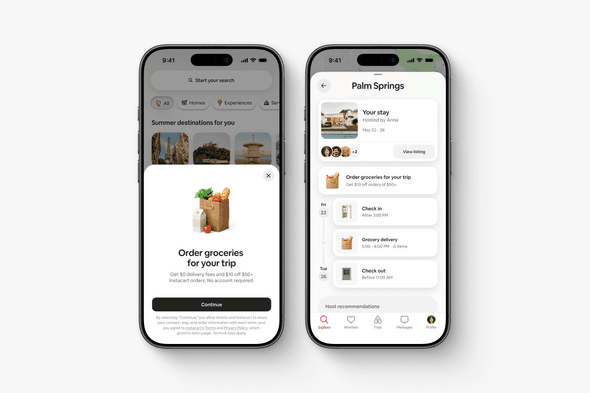
Last year's Services launch introduced an internal marketplace of providers: chefs, hair stylists, personal trainers, etc. The 2026 release takes a different approach: named external brand partnerships for practical trip logistics.
Grocery delivery is now available through Instacart in over 25 US cities, with guests receiving $0 delivery and $10 off orders of $50 or more. In select cities, hosts can receive the delivery themselves and pre-stock the home before check-in. Airport pickups are live in over 160 cities worldwide through Welcome Pickups, with a 20% guest discount and flight-tracking included. Luggage storage is available through Bounce across 15,000+ locations in 175 cities with Airbnb guests getting 15% off. Car rentals are being added later this summer, with first-time renters receiving 20% credit back toward a future stay, experience, or select service.
The structural shift is significant: Airbnb has never partnered externally to power its services before. Named brand partners signal to guests that these aren't experimental features. They're infrastructure, a permanent part of every trip booked on the platform.
Experiences: Doubling down on what converts
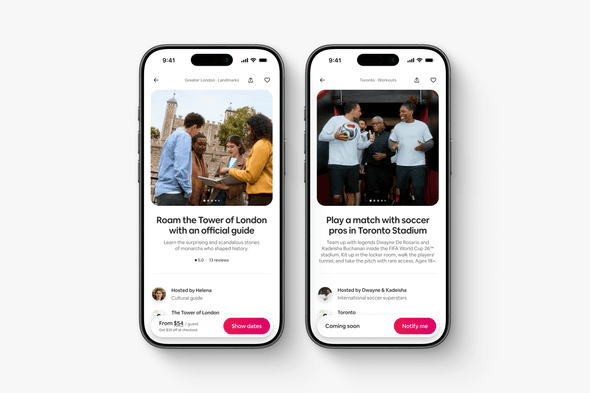
Airbnb Experiences average 4.93 out of 5 stars across the platform. The 2026 release expands them significantly, but in a deliberate direction. Landmark experiences (now 3,000+) and food culture (2,500+) are getting the most investment because these are the categories that actually convert at scale. The more niche and specialized an experience, the harder it is to find enough supply and demand to make it work across 650 cities.
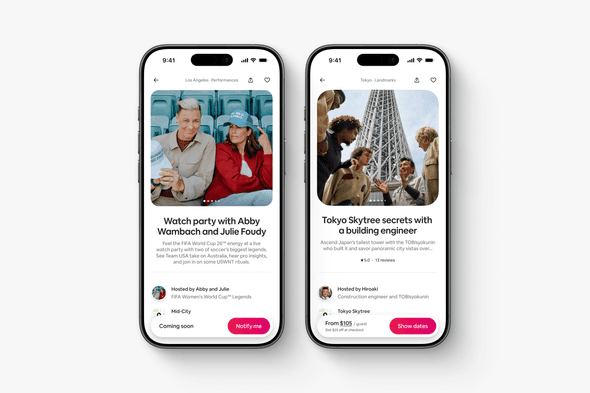
The FIFA World Cup partnership is the headline. Airbnb is offering exclusive experiences across six host cities, from watch parties with Abby Wambach and Julie Foudy to pitch sessions with Javier Mascherano, that cannot be booked anywhere else. This is the first time Airbnb has used exclusive live event access as a product differentiator. If it works, what comes next? Olympics, Formula 1, Coachella? Live event exclusivity could become a recurring strategic pillar and one that drives platform bookings in host cities regardless of whether hosts are directly involved.
Boutique and independent hotels: Airbnb's first loyalty program
This is the announcement that has received the most coverage but the least accurate interpretation.
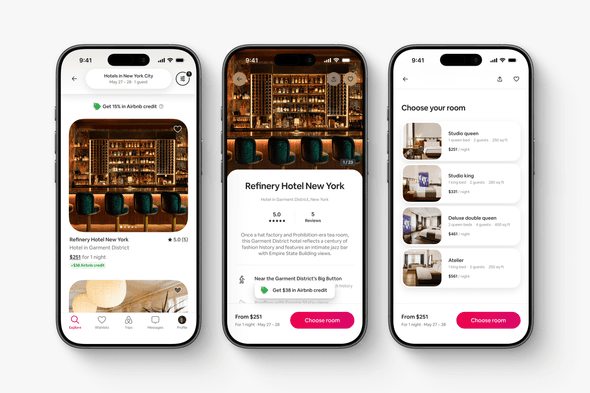
Airbnb is bringing thousands of boutique and independent hotels to the platform in 20 cities: no chains, curated for neighborhood character and design. Each booking comes with a price match guarantee and up to 15% credit back toward a future Airbnb home stay.
What nobody is calling this: a loyalty program. Airbnb has famously never had one. Booking.com has Genius. Expedia has One Key. Airbnb now has a credit mechanism that creates a hotel-to-home flywheel, and it's offering 15% back at a time when typical loyalty programs return 2-3%. This is not a hotel feature, it's a guest retention engine. According to AirDNA’s Chief Economist Jamie Lane, 55% of hotel bookers go on to book a home. If those numbers hold at scale, this funnels hotel guests directly into home inventory, which benefits short-term rental hosts.
The competitive implication is double-edged, though. More platform traffic benefits everyone. But boutique hotels now compete directly with private listings in the 20 launch cities, with platform-subsidized economics behind them. Premium differentiation such as unique design, hyperlocal character, and operational excellence becomes more important, not less.
AI: the interaction layer
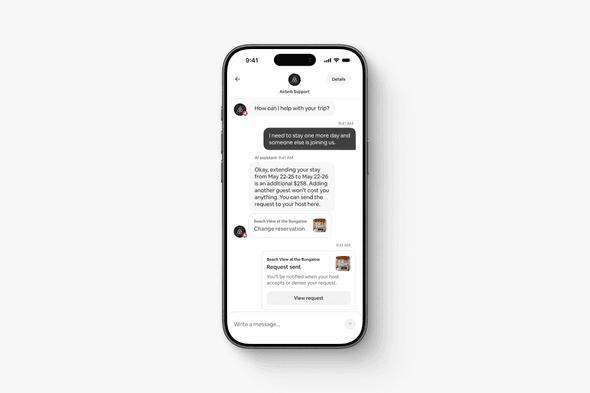
Natural language search was already live in the US before the release announcement. The rest of the AI features are newer, but together they represent the most AI-forward Airbnb release to date: AI review highlights that synthesize patterns across Airbnb's billion-plus reviews, AI-powered listing comparison, a personalized homepage that merges stays, hotels, experiences, and services into a single AI-curated feed, and AI customer support rated best in travel, now in 11 languages, with voice coming later this year.
What the 2026 Airbnb Summer Release means for the STR industry
Before drilling into the implications for vacation rental hosts, it's worth naming what the 2026 release signals at the industry level because several of these shifts go beyond Airbnb.
AI optimization is the new channel optimization
For years, short-term rental hosts optimized listings for just human scanners: compelling prose, strong photos, keyword-rich titles. That era is ending. Discovery, comparison, Q&A, and review interpretation are now AI-mediated. The new optimization target is structured, complete, consistent data that an algorithm can read and act on, and not just a paragraph that resonates with a human.
Category lines are blurring
Airbnb is adding boutique hotels. Hotels are being pushed to look more local and experiential to qualify for the platform. OTAs everywhere are adding AI assistants. STR operators are increasingly adding services and experiences. From the guest's perspective, the categories, i.e. home, hotel, service, and experience, are collapsing into a single scroll. Guests see options, not property types. That's a different competitive environment than the one hosts built their strategies for.
Airbnb is competing for guest lifetime value, not just bookings
Groceries, airport pickups, car rentals, luggage storage, experiences, social planning tools, and AI support all increase app session length and stickiness. Airbnb is building to monetize and influence more trip moments than the stay itself, and every additional moment it captures is a moment where the guest's attention, loyalty, and spend stays on the platform rather than elsewhere.
What do Airbnb hosts need to know in 2026?
1. Every guest now sees a different version of your listing
The endgame of Airbnb's AI investment is a listing page dynamically personalized for every individual guest.
The direction of Airbnb’s AI investment points toward a more personalized listing experience for every guest.
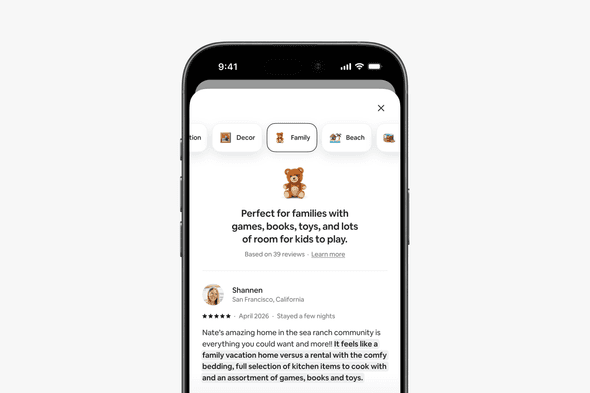
A family browsing your property sees the pool, child-safety features, and family-friendly neighborhood. A remote worker sees your desk setup, Wi-Fi speed, and quiet hours. Someone who always books food tours sees your proximity to the local market. Airbnb’s AI surfaces different attributes to different guests based on their profile, past trips, and behavioral signals, and the host has no control over which version any particular guest sees.
As Stephenson explained: "As we know more and more about the guests, we can personalize the entire experience much more... every time you open the app, it will be a more personalized experience."
What this means practically: your listing data is now doing the selling. Airbnb’s AI will not be extracting nuances from your listing description. Instead, it reads fields, tags, and structured attributes. If your property has fast Wi-Fi but it isn't tagged, the AI doesn't know to surface it to the remote worker. If you have a crib but it isn't listed as an available amenity, the family doesn't see it. If your neighborhood walkability isn't captured in structured form, it won't appear in the location summary.
How Hostaway helps:
Hostaway's listing management keeps your structured data such as amenities, house rules, property attributes, and accessibility features, synced and current across Airbnb and every other booking platform you operate on. Hostaway's Host Quality Dashboard scores your listing performance and surfaces gaps that are likely hurting your visibility and conversion. For managers running portfolios of 10, 50, or 200 properties, keeping field-level data complete and current at Airbnb's pace of change isn't something you can manage manually. The PMS that maintains that data layer is no longer optional; it's the foundation of how you compete.
2. Airbnb’s AI takes over the sales conversation. Direct bookings matter more than ever
Think about what AI review highlights, personalized homepages, AI-powered comparison, and AI customer support have in common: a guest can now go from discovery to booking intent with minimal or zero host interaction. The AI surfaces your listing, summarizes your reviews, compares you against competitors, and answers support questions, all without you being in the room.
The platform is increasingly the sales agent, working from the data you have filed. This is not a UX improvement. It is a structural shift in who owns the guest relationship at the moment that matters most. In practical terms, hosts need to treat every Airbnb booking as the start of a relationship they can continue through better communication, post-stay follow-up, and direct booking infrastructure. Building a direct booking channel is strategically more important than ever.
As Airbnb's AI mediates more of the on-platform guest relationship, the conversations and connections that happen off-platform become your most valuable asset. A guest who books through Airbnb and then receives a personalized pre-arrival message with local tips, a mid-stay check-in that resolves an issue before it becomes a review, and a thoughtful follow-up after checkout is a guest who remembers the host and not just the platform. That's the guest who visits your direct booking website next time. That's the guest who refers friends without Airbnb in the loop. That's the relationship no AI can own on the platform's behalf.
How Hostaway helps:
Hostaway's AI Replies automatically handles up to 90% of guest messages, saving property managers 4–5 hours a day and ensuring no guest message goes unanswered on your end even as Airbnb's AI handles more on theirs. For the full guest journey, Hostaway's automated messaging engine, with 15 event triggers and 12 conditions, covers pre-arrival instructions, entry codes via smart locks, local recommendations, mid-stay check-ins, checkout reminders, and post-stay follow-up. These are the touchpoints that build guest relationships that outlast any single booking.
Hostaway's direct booking engine and website builder tools give you the infrastructure to convert returning guests, capturing them before they re-enter the Airbnb funnel, at no commission and with no AI intermediary standing between you and the relationship you've built. Hostaway's own 2026 STR Report found that nearly two-thirds of operators generate less than 25% of their bookings through direct channels. As Airbnb deepens its grip on the on-platform guest relationship, closing that gap stops being aspirational and starts being a competitive necessity.
3. Your reviews are now a data set, not a timeline
Airbnb’s Review Highlights don't read your most recent reviews. They scan your entire review history and surface recurring patterns, i.e. the themes that appear again and again across every guest who has ever stayed at your property.
This kills the oldest host playbook in the book: bury a bad review under a wave of fresh five-stars. If a complaint recurs (think slow check-in, thin walls, a missing amenity, a noise issue) it will surface in the AI-generated highlights regardless of how many positive reviews follow it. Recency no longer provides cover.
The flip side is genuinely useful. Consistent positive themes get pinned too. If guests repeatedly mention your hospitality, your immaculate cleanliness, or your incredible views, those patterns surface prominently without you manufacturing them.
Operational consistency is now a visible ranking signal. The experience a guest has on their first stay and the tenth stay you've hosted this month need to be indistinguishable because the AI is reading across all of them.
How Hostaway helps:
With Hostaway's Review Insights AI automatically analyzes sentiment patterns across your review history, identifying recurring issues before they become embedded algorithmic signals, and surfacing what guests consistently love so you can lean into it. Combined with automated messaging that drives consistent preparation and mid-stay check-ins that catch problems before checkout, Hostaway creates the operational rhythm that produces clean, consistent review patterns at scale. Catching a problem during a stay and before the guest writes about it is worth more than a dozen five-star reviews after the fact.
The FIFA World Cup is a revenue event happening right now
Stephenson confirmed Airbnb’s belief that the 2026 FIFA World Cup is “going to be bigger than the sum of both the summer Olympics in Paris and the Winter Olympics in Italy.” Airbnb has added 100,000 listings across 16 host cities. Seventy-seven percent of available homes on Airbnb are priced under $500 per night, making the cost-per-person for groups highly competitive against hotels.
While World Cup host cities in general are likely to be already pacing well ahead of seasonal norms, the critical variable most hosts are not accounting for is that late-round demand is unpredictable. When a major nation advances, demand in the relevant host city spikes within hours. Hosts running static pricing, i.e. rates set weeks ago and left unchanged, will miss those spikes entirely.
How Hostaway helps:
Hostaway Dynamic Pricing adjusts your rates daily in response to real-time demand signals such as occupancy trends, local event activity, booking pace, and more without requiring manual intervention. For World Cup host city operators, this is the difference between capturing the late-round surge when a passionate fanbase suddenly needs accommodation and watching your calendar fill at rates you set in April. Hostaway's multi-calendar and real-time channel sync also protect against double-booking risk that spikes during compressed, high-demand event windows across multiple OTAs.
The bigger picture
Airbnb is building a platform where every booking generates data that makes the next recommendation more precise, which drives more engagement, which generates more bookings. Hotels feed home bookings. Experiences bring guests back. Services extend the session. AI stitches it all together.
It's a well-designed flywheel. And hosts are essential to it as the inventory that makes the whole thing worth using.
But the flywheel is Airbnb's, not yours. Every AI feature in the 2026 release is optimized for platform-level conversion. Where those interests align with individual host outcomes, everyone wins. Where they diverge — in pricing pressure, in hotel competition, in which listings the algorithm surfaces — the platform's interests take priority.
The professional hosts and property managers who will thrive are those who understand this clearly and build accordingly: listing data that the AI can read and sell, operational systems that produce consistent reviews, pricing that responds to real demand, and a direct booking infrastructure that turns platform guests into long-term relationships that no algorithm can mediate.
The 2026 release rewards exactly those things. Hostaway is built for exactly those things.
Hostaway is the leading all-in-one vacation rental management platform and an Airbnb Preferred+ Software Partner. Ready to see how Hostaway helps you stay ahead as Airbnb evolves? Book a free demo today.
Ready to find out how Hostaway can transform your business?






Validated PCI DSS v4.0.1 Level 1 Service Provider.


