2025 Guide to Short Term Rental Agreements, Leases, & eSignatures


Why Every Short-term Rental Needs a Solid Agreement in 2025
Renting out a property in 2025 isn’t what it used to be. With the rise of platforms like Airbnb and Vrbo, the short term rental market has exploded — and so have the expectations. Guests want hotel-level experiences. Hosts want peace of mind. And somewhere in the middle? A well-written short-term rental agreement.
Whether you’re renting out your vacation property for a weekend or managing a thriving short-term rental business, having a clear, legally binding document in place is no longer optional. It’s essential.
A thoughtful rental agreement protects both the property owner and the guest. It lays out the house rules, confirms details like the property address, rental period, security deposit and cancellation policy and helps avoid confusion, disputes — or worse.
In this guide, we’ll walk you through everything you need to know to create or update your vacation rental agreement in 2025. From what to include, to how to use eSignatures that hold up in court, to red flags that could signal a risky guest — we’ve got you covered.
Whether you're new to hosting or a seasoned pro, this is your go-to resource for writing a short-term rental contract that’s smart, enforceable and designed to protect what matters most: your time, your guests and your property.
Disclaimer — the templates and information contained in this article are not meant to replace proper, professional legal counsel. You should always consult a lawyer before entering into a legal agreement with another party.

What is a Short-term Rental Agreement?
A short term rental agreement is a legal document that outlines the terms and conditions of a stay at a vacation rental property, typically for 30 days or fewer. It’s designed to protect both the property owner and the guest by clearly defining expectations, responsibilities and rules before the stay begins.
While it may sound formal, this agreement is one of the most important tools you can use to ensure a smooth, stress-free rental experience. It helps prevent misunderstandings, covers what happens in case of property damage or early cancellations and gives both parties something to refer to if questions come up during the guest’s stay.
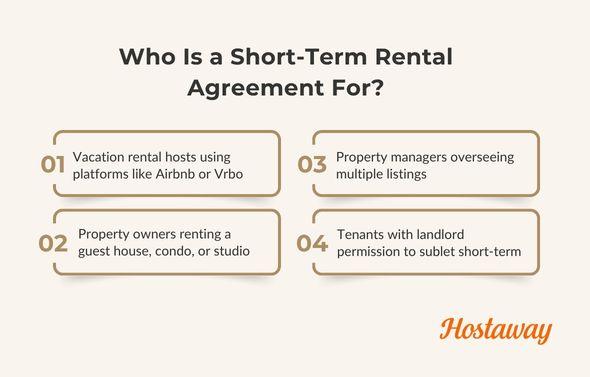
Who is a Short-term Rental Agreement For?
This type of agreement is useful for anyone offering a furnished property on a temporary basis, such as:
Vacation rental hosts using platforms like Airbnb or Vrbo
Property managers overseeing multiple listings
Individual property owners renting a guest house, condo or studio
Tenants with landlord permission to sublet short-term (rental arbitrage)
Even if you’re just renting out your vacation home a few times a year, having a short-term agreement can protect your rights and your property.
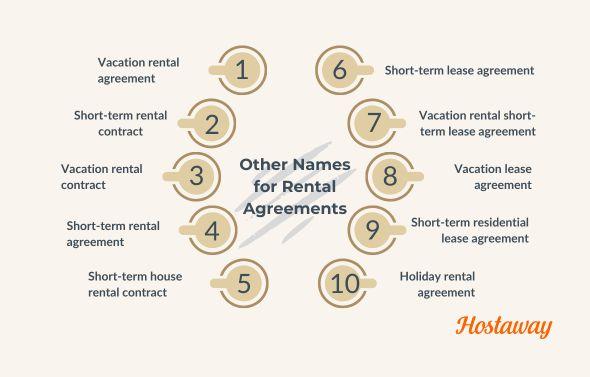
Other Names for Vacation Rental Agreements
You might hear these agreements called different things depending on where you're located or how the rental is marketed. Common variations include:
Vacation rental agreement
Short-term rental contract
Short-term rental agreement
Vacation rental contract
Short-term lease agreement
Short-term house rental contract
Vacation rental short-term lease agreement
Vacation lease agreement
Short-term residential lease agreement
Holiday rental agreement
These names are often used interchangeably, though in some areas, the language you choose could matter for governing law or tax purposes. (We’ll get into that later.)

What a Short-term Rental Agreement Means for Hosts Vs. Guests
While a short-term rental agreement is a shared document, it serves two very different roles depending on who's reading it. For guests, it sets expectations. For hosts, it creates accountability and protection. Here’s how it works for both sides:
What a vacation rental agreement means for guests: Clarity, boundaries and peace of mind
A vacation rental agreement isn’t just legal fine print — it’s a helpful guide for how to enjoy the property responsibly.
For guests, this agreement typically outlines:
Check-in and check-out procedures
Use of features like a swimming pool, hot tub or personal property (e.g., bikes, electronics)
Security deposit requirements and how damage to property is handled
Maximum occupancy, visitor policies and rules for unauthorized guests
If you’re offering a unique or alternative stay — say a yurt, cabin or tiny home — the agreement can also provide specific instructions for heating, water or air conditioning. It helps guests feel confident in how to care for the space while avoiding accidental issues.
What a vacation rental agreement means for hosts: Legal protection and operational clarity
For property owners or short term rental business operators, the agreement is a powerful tool. It makes sure your guests understand the terms of the stay — and what happens if those terms aren’t followed.
Specifically, it helps hosts:
Define property access, amenities and rental rules
Clarify communication expectations (e.g., only reachable during certain hours)
Limit liability for personal injury or damage to property
Enforce penalties if guests fail to follow key terms
Immediately terminate a stay if rules are broken or laws are violated
A good agreement is more than just a legal document — it’s a foundation for trust. When guests sign it, they’re acknowledging that they understand the expectations. And as the host, it gives you the legal standing to back up your cancellation policy, claim a security deposit or maintain quiet enjoyment for neighbors.
Is a Short-term Rental Agreement Mandatory?
Not exactly. In most cases, there’s no law that requires you to have your own short term rental agreement. When guests click “book,” they’re usually agreeing to your policies through the platform — and many major OTAs (like Airbnb and Vrbo) already include built-in terms of service. So, it’s easy to assume that extra paperwork might be overkill.
But here’s the catch, while a rental agreement may not be federally mandated, it can still be essential — especially if you need to enforce your rules, protect your rental property or resolve a dispute. Depending on your local regulations, having a signed document might also be a requirement for things like business licenses or insurance coverage.
The bottom line? A short term rental contract isn’t always legally required — but it’s one of the smartest, most protective tools you can have as a host.

What if a guest refuses to sign your short-term rental agreement?
Some guests may hesitate when asked to sign a short term rental agreement — and that’s understandable. Contracts can feel formal, especially when someone’s just trying to relax over a holiday weekend.
But here’s the truth, even hotels require guests to sign or initial documents that cover rules, damages and payment policies. Your vacation rental is no different — in fact, it often needs more protection. It can help to reassure guests that the agreement is simply there to protect both parties in case something goes wrong — not to trap them in anything unfair.
While some guests may just be wary of paperwork, others might have less innocent reasons for avoiding a written agreement. This is especially true during high-risk weekends like the Fourth of July, New Year’s Eve or Valentine’s Day. If someone pushes back on signing, it could be a red flag — they may be planning to break some or all of your house rules, bring in unauthorized guests or avoid responsibility for damage to property. In these cases, it's often better to walk away from the booking than risk a stressful (and costly) stay.
At the end of the day, requiring a agreement signed helps filter out risky guests before they check-in — and protects your property, your peace of mind and your reputation.
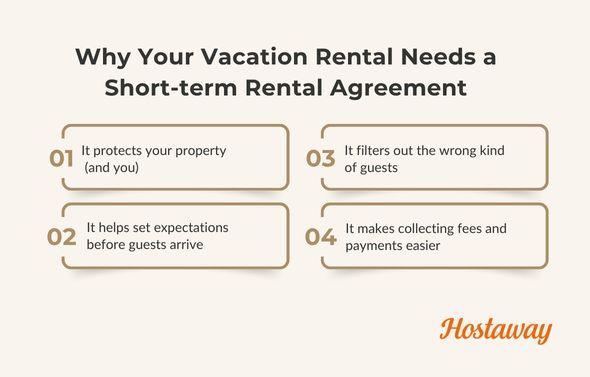
Why Your Vacation Rental Needs a Short-term Rental Agreement
At first glance, a short-term rental agreement might feel like just another formality — or worse, unnecessary paperwork. But in reality, it’s one of the smartest moves you can make as a host. Whether you're renting a city apartment for weekend getaways or managing a luxury vacation property full-time, having a written, legally binding document benefits both you and your guests.
It protects your property (and you)
Sure, you might already have your property rules posted in your listing or printed on the fridge. But without a signed vacation rental agreement, they’re just suggestions. A formal agreement gives your rules legal weight — it confirms that your guest agreed to the terms before their check-in.
A signed contract outlines the non-negotiables. If something goes wrong, you don’t just have a policy — you have a signed record that shows your guest acknowledged and accepted it.
That kind of documentation becomes especially useful if you ever need to make a claim with an insurance provider, seek a refund through a booking platform or prove a breach of agreement.
It helps set expectations before guests arrive
Not every guest reads listings carefully. And not every stay is the same. One guest might expect daily cleaning, another might assume pets are allowed. A strong short term rental contract removes the guesswork by giving guests a clear roadmap for their stay.
This kind of clarity doesn’t just prevent misunderstandings — it actually improves the guest experience. When people know what to expect, they relax. And when guests feel informed and respected, they’re more likely to leave a great review.
It filters out the wrong kind of guests
Some guests won’t want to sign an agreement. That’s okay — and it may be a sign. Think of your agreement as part of your screening process. It helps you attract guests who are aligned with your expectations — people who respect your property, your time and the boundaries you’ve set.
It makes collecting fees and payments easier
If you offer any extras — say, early check-in, linen rentals or breakfast service — a short-term rental agreement makes those optional charges crystal clear. By stating payment terms and additional fees like cleaning fees upfront, you avoid any awkward conversations or last-minute confusion.
And if you’re working through a platform like Vrbo or Airbnb, having your guest agree to these terms in writing can help you get faster resolution if a dispute arises. Many platforms and third-party insurers require documentation like a signed vacation rental agreement template to support claims or chargebacks.
In short, this isn’t just a form, it’s a framework. A well-drafted agreement protects your business, sets the tone for your guest’s stay and helps ensure that everyone walks away satisfied. And in a world where one bad stay can turn into a public review, that’s not just helpful — it’s essential.

Things to Consider With Regards to Your Short-term Rental Agreement
Writing a short-term rental agreement isn't just about listing rules — it's about creating a document that actually fits your property, your guests and the kind of experience you're offering. Whether you're hosting a sleek city apartment or a quiet countryside vacation home, the agreement should reflect how your space works and what you expect from your guests.
Start with the essentials, then build from there
Every agreement should include the basics: the property address, the rental period, check in and check out times and how you’ll collect payment. But don’t stop at the logistics. Think about your day-to-day operations, what do you expect from your guests? What do you want to be able to enforce if something goes wrong?
And if you or property includes extras — like a gym or pool access — be sure to document any added fees or usage terms.
Match your agreement to your rental style
Not all vacation rental properties are created equal. If your home includes a swimming pool, grill or fireplace, it’s worth adding safety instructions or disclaimers. If you’re in a remote location, you might want to clarify policies around property access, personal belongings or limited air conditioning. Think of your agreement as your voice when you’re not physically there.
Hosting a luxury loft? You may want a more detailed section on maximum occupancy, quiet enjoyment or use of high-end amenities. Hosting a pet-friendly cottage? Spell out whether additional guests are allowed and how pet-related damage or excessive cleaning will be handled.
Your rental agreement should do more than protect you legally — it should reflect your space, communicate your expectations and give your guests a clear, confident welcome. A thoughtful agreement isn’t just a formality. It’s a way to run your vacation rental business more smoothly, set the tone for a great experience and reduce the risk of misunderstandings down the line.

Key Elements Every Short-term Rental Agreement Should Include
A strong vacation rental agreement isn’t just about formality — it’s about clarity. It outlines everything your guest needs to know for a smooth stay and helps protect you in case things go sideways.
Whether you’re using a rental agreement template or writing your own, here are the essential terms and clauses you should include:
Essential clauses to include in your agreement
Clause/Term | Why it matters | Examples or tips |
Property address | Ensures clarity on where the property is located | Include full address, unit number and zip code |
Rental period | Clearly states the guest’s stay timeframe | Example: July 3–7, 2025, with 3 PM check-in and 11 AM check-out |
Maximum occupancy | Helps comply with local laws and safety rules | Example: Max 6 guests — no exceptions |
House rules | Protects your space and ensures a safe environment for other guests and neighbors | Example: No smoking, no parties, quiet hours after 10 PM |
Security deposit | Covers damage or violations to your property | Example: $300 refundable if no damage or rule violations |
Cancellation policy | Sets refund expectations for both parties | Example: 50% refund if canceled 7+ days before check in |
Payment method | Clarifies how you’ll collect payment | Example: Credit card via Airbnb, full payment upfront |
Property access | Outlines check-in instructions and limitations | Example: Keypad code provided 24 hours before arrival |
Additional fees | Avoids confusion about optional or required charges | Example: $50 cleaning fee, $20 pet fee per night |
Unauthorized guests | Sets limits on who can enter the property | Example: Only registered guests allowed — written approval needed for others |
Make it yours, but keep it consistent
If you have a swimming pool, hot tub, sauna or anything that needs special handling include safety disclaimers. If your home is off-grid or has quirks (like compost toilets or no central air conditioning), spell that out. And if you charge additional fees for things like early check-in, late chek-out, pets or other fees, be sure they’re included in the agreement.
If you’re not sure how to phrase things, a good short-term rental agreement template, perhaps a free template off the internet can help you get started and customize from there.
Here’s a FREE template from Hostaway.

Legal Considerations and Local Laws Around Short-term Rental Agreements
Creating a short-term rental agreement isn’t just about setting rules — it’s also about making sure those rules hold up. For your agreement to be enforceable, it needs to align with your region’s state and local laws, follow basic contract principles and account for any licensing or safety requirements in your area.
Understand your local and state laws
Short term rental laws vary dramatically depending on where your rental property is located. Some cities require business licenses, restrict the number of days a property can be rented out or have zoning laws that affect your eligibility to host.
Before you finalize your agreement, research:
Whether your city or county requires permits
Local occupancy limits and fire code regulations
Noise ordinances that affect quiet hours
Rules around taxes you may need to pay
Whether prior written consent is required from your landlord or HOA (if applicable)
Include a governing law clause
A good vacation rental contract should clearly state which jurisdiction’s laws will apply in case of a dispute. This is called a governing law clause and it helps determine where and how legal matters would be settled if needed.
Example:
“This agreement shall be governed by the laws of the State of California.”
This single sentence can make a big difference in ensuring your short-term rental agreement holds up.
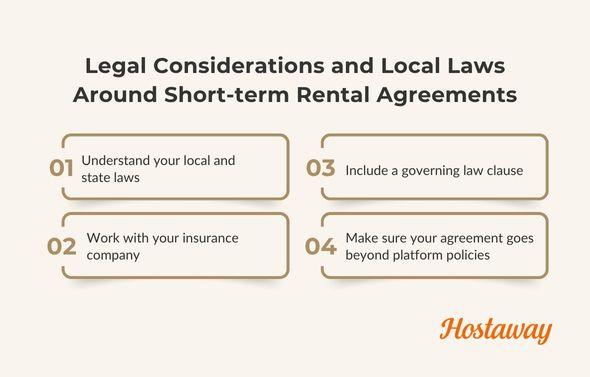
Work with your insurance company
If you want full protection for your vacation rental property, talk to your insurance provider about coverage options. Many standard homeowner policies don’t cover short-term stays, especially if you’re running a vacation rental business regularly.
Your insurer may also require that you use a written contract or rental agreement template in order to process claims for personal injury or property damage.
Make sure your agreement goes beyond platform policies
Hosting through platforms like Airbnb or Vrbo can make the booking process smoother — but they don’t eliminate your responsibility to comply with local regulations. While these platforms may provide a framework of rules or basic guest expectations, they don’t replace your own due diligence as a host.
In most cases, platforms assume that you’re managing your own compliance with state and local laws. That includes everything from fire code regulations to collecting taxes and maintaining proper insurance. Some platforms may allow or even recommend using a vacation rental agreement — but they rarely enforce it for you.
To stay covered, make sure your short-term rental agreement aligns with:
Platform rules (especially around cancellations, damages and guest communications)
Local ordinances for your rental property
Any applicable requirements from your HOA, landlord or insurance company
If you’re ever unsure, it’s worth getting legal advice or consulting a local real estate expert to make sure you’re in the clear.

How to use eSignatures for Short-term Rental Agreements in 2025
Gone are the days of scanning, printing or chasing signatures by email. These days, eSignatures are not only common — they’re reliable, legal and incredibly efficient. For hosts running a vacation rental business, collecting digital signatures makes managing rental agreements easier and more secure.
Why you should use eSignatures for your vacation rental agreements
An agreement that is signed is still legally binding — even if it’s signed online. In fact, most digital signatures are considered valid in U.S. courts under the ESIGN Act and UETA. That means you can enforce your vacation rental contract as long as it’s been clearly presented, accepted and stored properly.
For hosts, this means you can:
Automate the contract process from booking to check in
Avoid missing signatures or lost paperwork
Collect acknowledgments for house rules and security deposits in writing
Ensuring guest data safety when using digital rental agreements
While short term rental agreements protect your property, they also contain personal guest information — like full names, emails, phone numbers and occasionally billing details. That means cybersecurity matters. A lot.
To protect your guests and your reputation, even if you’re using a free template, it should be delivered and signed using a secure medium. If you wouldn’t email someone’s passport photo, don’t email an unsecured rental agreement either.
What to look for in a secure eSignature software
Choosing the right eSignature platform matters — not just for convenience, but for security. Your vacation rental agreement may contain sensitive guest data like full names, contact information and signed acknowledgments of terms of payment or policies around your property, occupancy, pets, smoking, etc.
To keep your business and your guests protected, look for eSignature tools that:
Offer end-to-end encryption and secure cloud storage
Provide timestamped audit trails for every signature
Comply with major privacy laws like GDPR or CCPA
Allow you to manage access, revoke documents or export data easily
Whether you're using a basic free template or a fully customized contract, always send and store your documents on platforms that put data security first. It’s one of the simplest ways to run a more professional — and more trustworthy — rental business.
Automating eSignature requests using Hostaway and Zapier
Once you’ve decided to use eSignatures to streamline your short-term rental agreements, automation can take the entire process to the next level. If you're using Hostaway to manage your vacation rental property, you're already set up for success.
Hostaway integrates with several leading e-signature software platforms through Zapier, making it easy to automatically send, track and collect signatures without manual follow-up.
These supported platforms include:
Each of these tools not only makes the signing process faster — they also take cybersecurity seriously. Each one uses end-to-end encryption, secure cloud storage and built-in audit trails to keep your documents and your guests’ personal data protected.
Combined with Hostaway’s own commitment to data privacy and digital security, this setup ensures that sensitive personal information — like guest names, emails and signed legal documents — is handled responsibly from start to finish.
By connecting Hostaway and Zapier with your chosen e-signature tool, you can:
Automate contract delivery after booking
Track who has signed (and send reminders)
Store signed rental agreements securely in the cloud
This kind of automation doesn’t just save time, it protects your business and adds a layer of professionalism your guests will notice.

Best Practices: The Dos and Don’ts of Short-Term Rental Agreements
Writing a short-term rental agreement doesn’t have to be overwhelming — but it does need to be clear, consistent and thoughtfully written. Whether you’re using a rental agreement template or drafting one from scratch, here are some smart best practices (and common mistakes to avoid).
The dos and don’ts of short-term rental agreements
Do | Don’t |
Use a written agreement every time Even if booking through a platform, always have your own legally binding agreement to cover specifics they don’t. | Rely only on verbal agreements If it’s not written down, it’s not enforceable. Period. |
Include the key details Don’t skip essentials like the property address, rental period, check-in/check-out times, security deposit, etc. | Leave out local legal requirements Ensure your agreement aligns with state and local laws, fire code regulations, and insurance requirements. |
Clearly list house rules Be specific about quiet hours, maximum occupancy, and whether additional guests are allowed. | Forget to customize A generic free template is a great starting point, but tailor it to reflect your unique property and expectations. |
Protect yourself with payment terms Outline payment method, due dates, and any extra fees (like cleaning or late checkout). | Allow unclear or vague terms Ambiguity creates loopholes and weakens enforceability. |
Use a secure platform to send and sign Choose trusted eSignature tools; avoid sending sensitive documents via unencrypted channels. | Ignore red flags from guests If a guest refuses to sign or pushes back on your terms, it’s okay to cancel the booking. You’re protecting your property. |

What Every Host Should Remember About Rental Agreements
A strong short-term rental agreement does more than check a legal box — it gives you confidence as a host, clarity for your guests and a framework that protects everyone involved. From outlining house rules to managing security deposits it’s your first and best line of defense against misunderstandings and missed expectations.
Whether you're running a full-time vacation rental business or just listing your vacation property on weekends, taking the time to create a well-structured, secure and legally sound agreement is one of the smartest things you can do. It’s a small investment that pays off in fewer disputes, better guest experiences and a more professional hosting operation overall.
Still have questions? Let’s answer them.

FAQs About Short-Term Rental Agreements
1. Do I need a lawyer to create a short-term rental agreement?
Not necessarily. Many hosts use a rental agreement template and customize it for their property. But if your rental is in a complex legal area (like rent-controlled zones or strict HOAs) or if you have unusual clauses, it’s smart to have a lawyer review your document at least once.
2. Can I use the same agreement across different properties or locations?
Not always. While the basic structure may stay the same, local and state laws can vary — especially around occupancy limits, security deposits and cancellation policies. Always tailor the agreement to reflect each property's location and legal requirements.
3. What happens if a guest violates the agreement after signing it?
If you’ve used a legally binding document with clear terms, you’re in a stronger position to enforce penalties — like keeping the security deposit, denying a refund or even immediately terminating the stay. You can also use the signed agreement as evidence in claims with OTAs or insurance.
4. Can I make guests sign a rental agreement if I use Airbnb or Vrbo?
Yes, but there are rules. Airbnb allows it as long as guests are informed before booking. Vrbo also supports custom agreements. Just make sure your contract doesn’t conflict with platform terms and always disclose upfront that signing will be required.
5. Is an eSignature valid if the guest signs on their phone?
Yes. As long as the guest willingly signs through a recognized platform, eSignatures are legally valid — whether they sign via laptop, tablet or phone. What matters most is that the process is secure and traceable.
6. Can I enforce a rental agreement if I didn’t collect a signature?
It's much harder. While verbal or implied agreements might hold up in rare cases, most insurance companies, platforms and legal systems require the agreement to be signed — especially when it comes to disputes, damages or refunds. Without a signature, you risk losing any leverage.
Ready to find out how Hostaway can transform your business?