Airbnb rules in New Orleans: A 2026 compliance guide for hosts
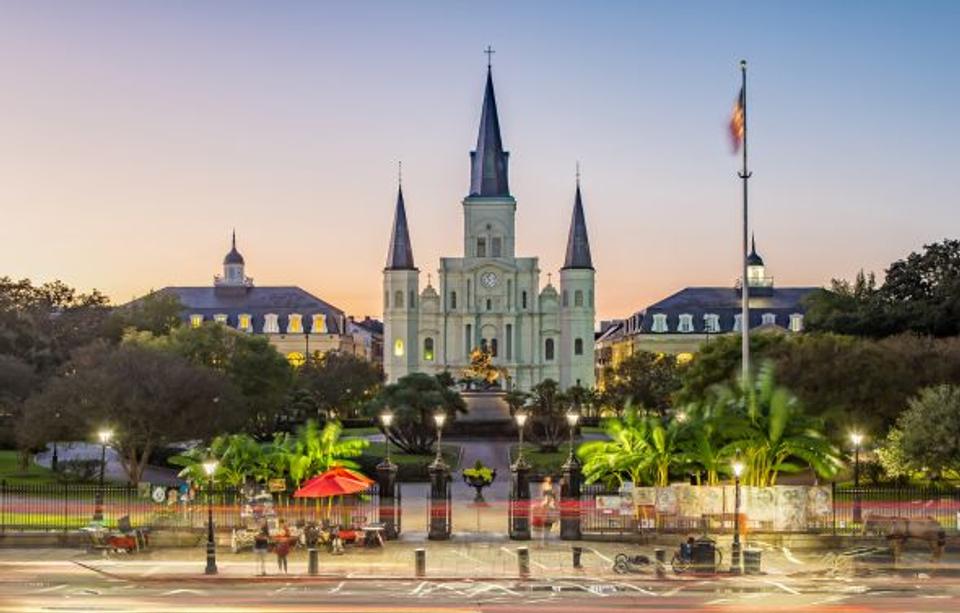

New Orleans remains one of the most popular tourism destinations in the United States. Millions of visitors come every year for events like Mardi Gras, Jazz Fest, and major conventions. That strong demand has made short-term rentals (STRs) an attractive opportunity for property owners and Airbnb hosts.
But operating an Airbnb in New Orleans is far from simple.
Over the past decade, the New Orleans City Council has repeatedly adjusted city regulations to balance residents' concerns about housing availability with the economic benefits of tourism. As a result, the city's laws now create one of the most tightly regulated short-term rental markets in the country.
If you plan to operate a vacation rental in New Orleans, understanding the current rules is essential. Operating illegally can lead to large fines, listing removal from STR platforms, or even permit revocation.
This 2026 compliance guide explains how Airbnb rules in New Orleans work today, including permits, zoning restrictions, taxes, and enforcement requirements.
What this guide covers
This comprehensive resource explains New Orleans short-term rental regulations, including STR permit requirements, zoning restrictions, operator licensing rules, tax obligations, safety compliance standards, enforcement policies, and the step-by-step application process required to operate legally.
This guide focuses exclusively on legal compliance for short-term rentals in New Orleans. It does not cover general Airbnb hosting tips, marketing strategies, pricing optimization, or property management advice unrelated to regulatory requirements.
Who this is for
This guide is designed for current and prospective short-term rental hosts in New Orleans, including property owners considering vacation rentals, real estate investors evaluating STR opportunities, and property managers responsible for compliance.
Whether you’re launching your first Airbnb or ensuring your existing short-term rental property in New Orleans remains compliant with the latest city regulations, this guide provides clear explanations of the legal framework and actionable compliance steps.
Why this matters
Short-term rentals in New Orleans are heavily regulated and actively enforced by city officials.
The City of New Orleans monitors listings across major STR platforms and investigates complaints from residents and neighborhood groups. Hosts operating without permits or violating zoning rules risk significant fines, permit revocation, and removal from booking platforms.
Recent updates to short-term rental rules have also introduced stricter platform verification requirements, permit caps, and density limits across many residential areas. As a result, understanding the city’s laws before listing a property is essential for avoiding costly enforcement actions.
What you’ll learn
By the end of this guide, you will understand:
How short-term rentals are regulated in New Orleans
The difference between NSTR and CSTR permits
How zoning rules affect STR eligibility in residential and commercial areas
The operator permit and STR permit application process
The lodging tax obligations for New Orleans STR operators
Safety, insurance, and operational compliance requirements
How the City of New Orleans enforces short-term rental laws
Why New Orleans regulates short-term rentals
The regulation of short-term rentals in New Orleans has evolved significantly since the city first began addressing the issue.
Originally, rentals shorter than 30 days were largely prohibited under municipal law. In 2015, the New Orleans City Council asked the City Planning Commission to study how STRs affect neighborhoods and housing availability. After that review, the city passed its first ordinance regulating short-term rentals in 2016.
STR permits officially began being issued in 2017.
Since then, the Orleans City Council has repeatedly adjusted city regulations to address concerns about:
housing shortages
illegal STR activity
tax compliance
More recently, the current short-term rental law went into effect in March 2024, after a federal judge ruled the ordinance constitutional following legal challenges from Airbnb and local property owners.
Today, the city's STR laws aim to balance tourism demand with the needs of residents across Orleans Parish.
Understanding New Orleans short-term rental laws
Under the city's comprehensive zoning ordinance, a short-term rental is defined as:
The use of a legal dwelling unit by guests for fewer than 30 consecutive days in exchange for payment.
This definition distinguishes short-term rentals from long-term rentals, which involve stays longer than 30 days and do not require an STR permit.
Short-term rental activity must take place in a legal dwelling unit with complete living facilities, including sleeping, cooking, and sanitation.
Most STR transactions occur through major STR platforms such as Airbnb or VRBO, although these companies do not issue permits or enforce local regulations.
Instead, all licensing and enforcement are handled by the City of New Orleans Short-Term Rental Administration.
Types of STR permits in New Orleans
All short-term rental operators must obtain a city-issued STR permit before advertising or renting their property.
The city requires two permits for most listings:
an operator permit
an owner permit
These permit numbers must be displayed on STR platforms when advertising a rental.
New Orleans distinguishes between two main permit types.
Permit Type | Description | Key Requirement |
NSTR (Non-Commercial STR) | Residential short-term rentals | Owner must live on-site |
CSTR (Commercial STR) | Commercial or mixed-use zones | No owner occupancy required |
Non-Commercial STR permits (NSTR)
An NSTR permit applies to residential properties. Requirements typically include:
The owner must live on-site as their primary residence
Proof of homestead exemption
Compliance with zoning regulations
Completion of mandatory STR owner training
Only one STR unit per property owner per city square is permitted in residential areas. If multiple property owners apply within the same square block, the city uses a lottery system to determine which permit applications are approved.
Commercial STR permits (CSTR)
Commercial short-term rentals operate in commercial or mixed-use zones. CSTR permits allow operators to rent entire units without living on the property. Key requirements include:
zoning approval in commercial districts
compliance with building occupancy rules
The fee for a CSTR license is typically around $1,000.
Where Airbnb is allowed in New Orleans
Zoning rules determine where short-term rentals can operate. Certain residential areas restrict STR activity to owner-occupied homes only. Other neighborhoods have stricter bans.
Examples include:
Area | STR Status |
French Quarter | STRs prohibited |
Historic Garden District | STRs prohibited |
Residential zones | Owner-occupied only |
Commercial zones | CSTR permits allowed |
Density limits also apply. In residential areas, only one short-term rental permit per city square is allowed. These limits help the city regulate STR growth while preserving neighborhood character.
Licensing requirements and application process
To operate legally, short-term rental operators must complete the official licensing process. Typical application requirements include the following:
Proof of property ownership
Operator permit registration
Proof of liability insurance
Completion of STR owner training
Noise monitoring device installation
Proof of zoning compliance
Applications are only accepted during specific application periods throughout the year. When demand exceeds available permits, the city uses a lottery system to allocate them. Permits are typically valid until June 30 of the following year and must be renewed annually.
Operational rules that hosts must follow
In addition to permits, hosts must follow operational rules designed to protect guests and neighborhoods.
These include:
maintaining safety equipment
monitoring guest behavior
complying with zoning restrictions
ensuring guests follow local rules
Occupancy limits
Most short-term rental units in New Orleans must follow strict occupancy limits designed to prevent overcrowding and reduce neighborhood disturbances. In most cases, the city allows two guests per bedroom, plus two additional guests, with an overall maximum of ten overnight guests per dwelling unit.
These limits apply regardless of the booking platform used. Hosts are responsible for clearly communicating occupancy limits to guests before arrival and monitoring compliance during the stay. Violations, especially when tied to parties or large gatherings, can trigger complaints, inspections, and potential enforcement actions from city officials.
On-site operator requirement
For many residential short-term rentals, the city requires that a property manager or operator live on-site while guests are staying. This rule ensures there is a responsible party available to address issues such as noise complaints, guest disputes, or safety concerns.
The on-site presence requirement is particularly important in residential neighborhoods where the city aims to balance tourism with quality of life for full-time residents. Property owners who do not live at the property themselves may designate a qualified local property manager to fulfill this role and respond quickly if problems arise.
Safety requirements
All STR units must meet the city's safety standards. These often include:
smoke detectors
carbon monoxide detectors
emergency contact information
Properties must also install an approved noise monitoring device to track excessive noise levels.
Insurance requirements
Short-term rental operators in New Orleans must maintain a minimum $1,000,000 liability insurance policy covering the STR property. This insurance helps protect both hosts and guests in the event of accidents, injuries, or property damage that occur during a rental stay.
Proof of insurance is typically required during the STR permit application process and must remain active for the duration of the permit period. Many hosts obtain specialized short-term rental policies or endorsements to ensure their coverage accounts for the commercial nature of STR activity.
Taxes and financial obligations
Operating a short-term rental in New Orleans also comes with several tax responsibilities. STR operators must comply with both Louisiana state taxes and local city taxes that apply to short-term lodging. These taxes are typically calculated based on rental income or the length of each stay and must be reported to the appropriate authorities.
Below is an overview of the main taxes that apply to short-term rentals in New Orleans.
Tax Type | Description |
Louisiana sales tax | State tax applied to rental income |
STR occupancy tax | Local tax applied to short-term stays |
Hotel occupancy privilege tax | Per-night charge |
Exhibition Hall Authority tax | Tourism-related tax |
Combined city and state taxes for short-term rentals can exceed 25% of gross receipts.
Platform tax collection
Many STR platforms collect certain taxes automatically. For example, Airbnb collects and remits taxes to the City of New Orleans on behalf of its users. However, hosts still have important responsibilities.
Operators must:
Register with state tax authorities
File lodging tax returns
Maintain financial records of rental income
Even when Airbnb collects taxes, hosts must still submit required tax filings.
Legal challenges to New Orleans STR laws
The city’s short-term rental rules have faced multiple legal challenges. Airbnb and local STR operators have sued the city several times since 2016.
Some disputes have focused on restrictions affecting:
corporate entities
natural persons applying for permits
platform enforcement requirements
In one major ruling, a federal appeals court struck down a provision requiring each listing to advertise only one dwelling unit.
However, the court upheld rules requiring permit numbers and occupancy limits to appear in STR advertisements. Despite these challenges, most of the city’s STR regulations remain in force today.
Common challenges and solutions
Maintaining compliance with New Orleans short-term rental regulations requires careful attention to permit rules, zoning restrictions, and tax obligations. Many enforcement issues arise when hosts misunderstand permit availability, application timelines, or local zoning requirements.
Challenge 1: Applying for permits in high-demand areas
Solution: Verify zoning eligibility and available permit capacity before purchasing or listing a property intended for short-term rental use.
New Orleans limits the number of short-term rentals allowed in many neighborhoods, including restrictions such as one permitted STR per city square block in certain residential zones. Purchasing a property without confirming permit availability can leave owners unable to legally operate a short-term rental.
Challenge 2: Missing the application period
Solution: Track official permit application windows and prepare documentation well in advance of submission deadlines.
The City of New Orleans only accepts STR permit applications during designated periods throughout the year. Missing these application windows may delay the ability to obtain a permit for several months and, in competitive areas, can significantly reduce the chances of receiving approval through the permit lottery system.
Challenge 3: Managing tax obligations
Solution: Register with both the Louisiana state tax authorities and the City of New Orleans Bureau of Revenue, even if STR platforms automatically collect taxes.
While platforms such as Airbnb may collect certain lodging taxes on behalf of hosts, operators remain responsible for tax registration, reporting, and recordkeeping. Maintaining accurate financial records ensures compliance if the city or state requests documentation during an audit or enforcement review.
Challenge 4: Operating without understanding zoning rules
Solution: Confirm zoning eligibility through the City of New Orleans property viewer or zoning maps before advertising a listing.
Not all properties qualify for short-term rental use. Zoning restrictions determine whether a property can operate as a non-commercial or commercial short-term rental, and certain neighborhoods, including parts of the French Quarter and other historic areas, have additional limitations. Verifying zoning status before listing helps prevent permit denial or enforcement penalties.
Penalties and Enforcement Actions
The City of New Orleans enforces STR regulations aggressively. Common violations include:
operating without a permit
listing a property in a prohibited zone
exceeding occupancy limits
failing to register for taxes
Penalties can be severe. Operating without a permit may result in fines of $500 to $1,000 per day, with higher penalties for repeated violations. The city may also:
Revoke permits
Shut off utilities to illegal properties
Require STR platforms to suspend or remove non-compliant listings
As of June 2025, Airbnb must also verify valid permits before allowing bookings in New Orleans.
Conclusion and next steps
New Orleans remains a highly desirable market for short-term rentals. However, the city's laws create strict limits on how STR properties can operate.
Success requires careful attention to:
zoning restrictions
permit requirements
tax compliance
safety standards
Before launching a new Airbnb in New Orleans, LA, property owners should confirm that their property qualifies under current regulations and obtain all required permits.
With proper planning and compliance, it is still possible to operate a successful short-term rental business in the Crescent City.
FAQs
Can a condo association ban Airbnb in New Orleans?
Yes. Even if city regulations allow short-term rentals, private building rules or homeowner association policies may prohibit them.
Can you transfer a New Orleans STR permit to a new owner?
Most STR permits in New Orleans are non-transferable. If a property is sold, the new owner typically must apply for a new permit.
Are short-term rental permits capped in New Orleans?
Yes. Density limits apply in many neighborhoods, including the one-permit-per-square rule in residential areas.
Does Airbnb verify STR permits in New Orleans?
Yes. Under recent regulations, Airbnb must verify valid STR permits before allowing listings to accept bookings.
What happens if you operate an Airbnb illegally in New Orleans?
Operating without a permit can lead to significant fines, permit denial, listing removal from STR platforms, and possible utility shutoffs.
Ready to find out how Hostaway can transform your business?